Cold Reels, Hot Feelings: Why Every Comeback Spin Feels Like the Universe Is Finally on Your Side
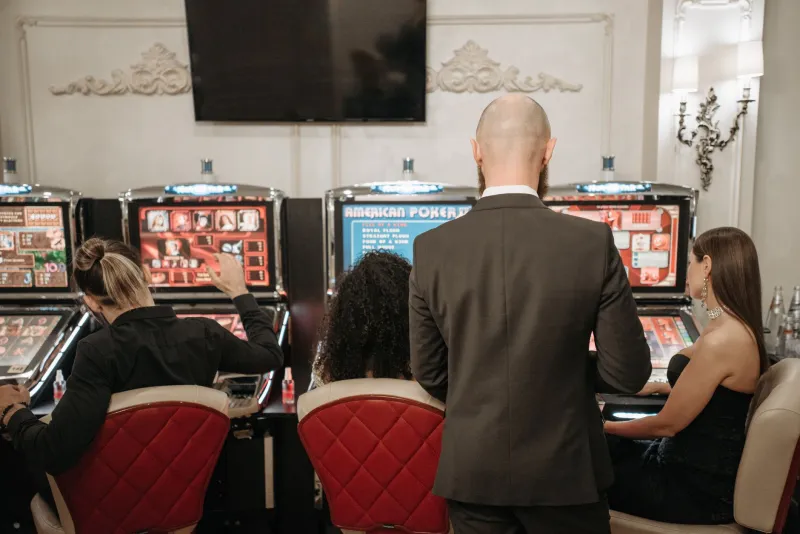
We've all been there. You're a dozen spins deep, your balance is looking a little thin, and then out of nowhere the reels start cooperating. A small win. Then another. Then a bonus trigger. Your chest tightens, you lean forward, and somewhere in the back of your mind a voice whispers: this is it — the comeback is real.
That feeling? It's one of the most powerful things a slot machine can produce. And it has almost nothing to do with what the game is actually doing.
Let's break it all down — the stats, the psychology, and why understanding both can actually make your time spinning a whole lot more enjoyable.
Your Brain Was Built to Find Patterns (Even Fake Ones)
Human beings are pattern-recognition machines. It's baked into our biology. For most of human history, spotting patterns — seasonal changes, animal behavior, which berries made you sick — was a survival skill. That ancient wiring doesn't switch off just because you're sitting at home clicking a spin button.
When you go through a cold streak and then land a few wins, your brain doesn't experience that as random chance. It experiences it as a sequence. A narrative. A turning point. Psychologists call this tendency apophenia — the very human habit of finding meaningful connections between unrelated events.
In slot terms, your brain looks at "ten losses, then three wins" and concludes: the game was cold, now it's warming up. That conclusion feels completely logical. It just also happens to be completely wrong.
What's Actually Happening Inside the Game
Here's the part that surprises a lot of casual players: modern slot machines — including every game you'll find at EZ Slot 22 — use something called a Random Number Generator, or RNG. This little piece of software produces thousands of number combinations every single second, and each spin lands on whichever result gets locked in the moment you hit that button.
The critical detail? Each spin is entirely independent of every spin before it.
That cold streak you just sat through? It didn't "use up" the bad luck. The machine didn't build pressure like a steam valve waiting to pop. The three wins that followed weren't a reward for your patience. They were simply the next random results in an endless, memoryless sequence.
The game doesn't know you've been losing. It doesn't care. It's not rooting for you or against you. Every single spin starts from the exact same statistical baseline.
So Why Does the Comeback Feel So Real?
Because your brain is doing something incredibly sophisticated — and incredibly misleading — in real time.
When wins start arriving after a dry spell, your mind retroactively reframes everything that came before. Those losses become "the struggle." The wins become "the payoff." You've unconsciously assembled a three-act story arc, and you're living in the triumphant third act right now. That's not a flaw in your thinking — that's just how human storytelling brains work.
There's also a neurochemical layer to this. Wins trigger dopamine releases. Wins that come after a stretch of nothing trigger an even bigger response, because the contrast is sharper. The relief and excitement stack on top of each other. Emotionally, it genuinely feels different from winning on your very first spin. Your body is responding to the narrative your brain invented.
This is sometimes called the gambler's fallacy — the belief that past outcomes influence future ones in a game of pure chance. It's one of the most well-documented cognitive biases in psychology, and slot machines are basically a perfect environment for it to thrive.
The Danger Zone: When "Momentum" Becomes a Reason to Keep Going
Understanding the comeback illusion matters for one very practical reason: it can quietly push players into chasing behavior without them even realizing it.
Here's how it typically unfolds. You're down. You tell yourself you'll stop after a few more spins. Then a couple of wins arrive and your brain shouts don't stop now, you're on a roll! Suddenly you're not playing to enjoy the game — you're playing to "complete" a comeback story that only exists in your head.
The momentum you're feeling is real as an emotional experience. It is not real as a mechanical phenomenon. And spending more money to chase a statistical pattern that doesn't exist is where casual, entertainment-focused fun can start to drift somewhere less healthy.
A good gut-check: ask yourself whether you're spinning because you're genuinely enjoying the experience, or because you feel like you owe yourself a recovery. If it's the second one, that's the narrative talking — not the game.
How to Ride the Fun Without Getting Swept Away
None of this means the comeback feeling is bad or that you should try to switch it off. Honestly, that surge of excitement when the reels suddenly start clicking in your favor is a huge part of what makes slots entertaining in the first place. The goal isn't to feel nothing — it's to know what you're actually feeling.
A few things that help keep it all in perspective:
Set your session budget before you start. Decide what you're comfortable spending for the entertainment value, the same way you'd budget for a movie or a night out. Once it's gone, the session is done — win streak or not.
Celebrate wins for what they are. A win is a win. It doesn't mean more wins are incoming. Enjoy it in the moment without letting it rewrite your plan.
Notice the story your brain is telling. When you catch yourself thinking "I'm due" or "I've got momentum now," just pause and name it. You don't have to fight it — just recognize it as a feeling, not a fact.
Time limits work as well as money limits. Sometimes the comeback feeling is also a "just one more" feeling. Deciding in advance how long you're going to play keeps the session fun instead of open-ended.
The Real Win: Playing With Eyes Open
Slots are designed to be entertaining. The lights, the sounds, the near-misses, the bonus builds — all of it is crafted to create an engaging experience. The comeback feeling is one of the most compelling parts of that experience, and there's nothing wrong with loving it.
But the players who get the most out of their sessions are the ones who enjoy the ride without confusing the story for reality. When you understand that each spin is its own fresh event — not a chapter in a redemption arc — you stop playing against an imaginary momentum and start just... playing.
And honestly? That's when it gets the most fun. No pressure, no chasing, no destiny required. Just you, the reels, and whatever comes next.